
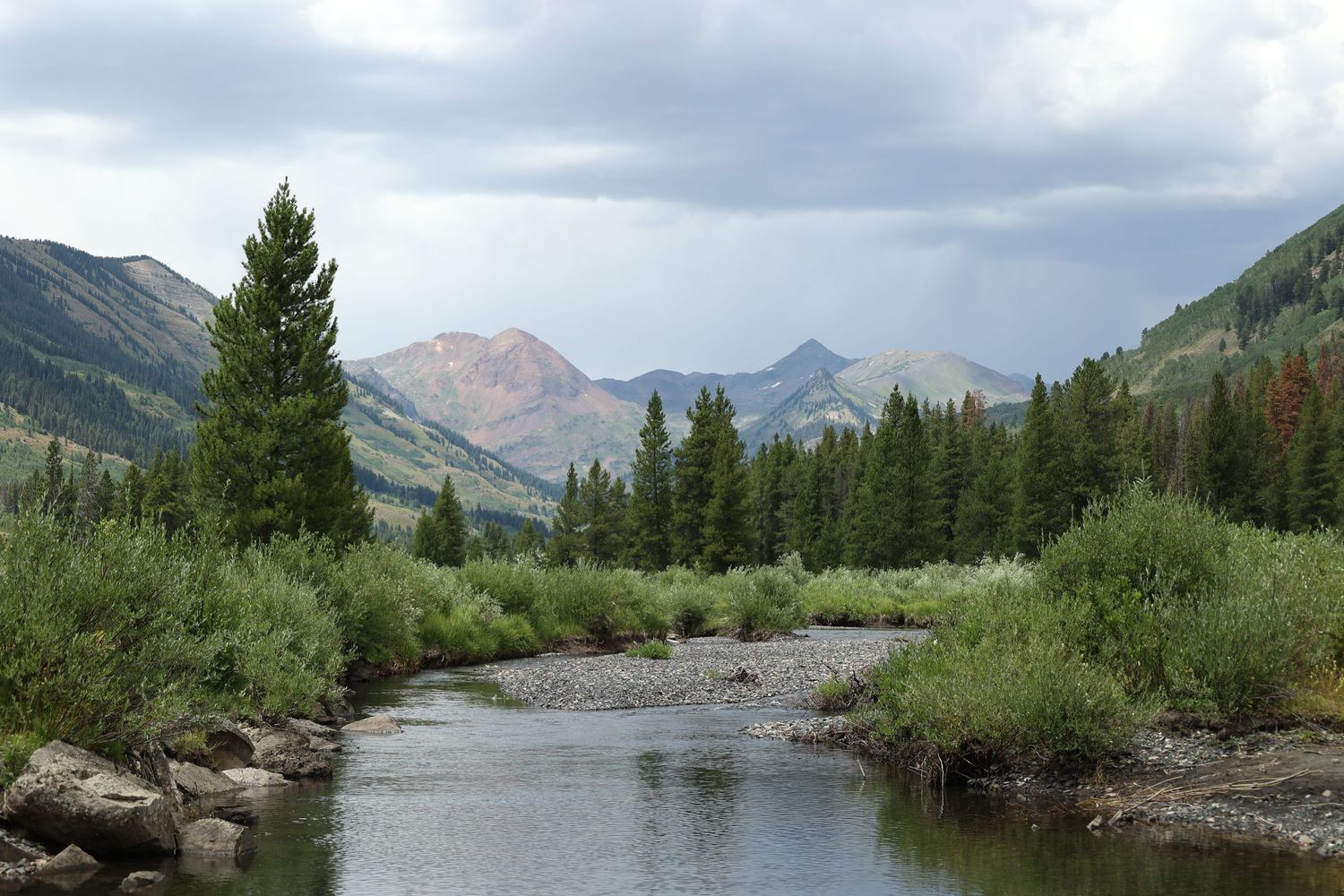
Welcome to the Flatlander's Guide to Colorado!
Colorado is home to thousands of miles of scenic trails, from difficult alpine routes to easy scenic walks. Knowing where to go- and when- can make all the difference in having a great experience outdoors. This hiking guide is a collection of practical, straightforward (maybe a little blunt?) advice to help you explore Colorado on foot. One of the biggest things I've noticed since I moved to the mountains is that a lot of people who visit, or even live here, don't know the first thing about exploring the mountains. But that's okay! There is absolutely no shame in that. That's what I'm here for. Whether you're visiting from out of state or looking to explore trails close to home, this guide will help you choose a hike or activity that's within your ability.
There is a lot of information about hiking out there, but most of it seems to require that you already sort of know what you're doing. Inside this hiking guide, you'll find instructions on how to plan a hike, information about Leave No Trace principles, what to wear, an overview of Colorado wildlife, a summary of each of the National Parks, and tips for if you're just visiting. The hiking, leave no trace, what to wear, and just visiting tips are on this page here. The wildlife and national parks have their own pages you can find in my blog.
This is all written directly from my years of experience hiking Colorado's trails, with an emphasis on respect and safety. You're free to take any of my advice, but if not then you're also free to become a statistic if you'd like.
how to plan a hike
Where do we even begin? First, in order to plan a hike you have to know your limits. In order to know your limits, you have to hike. It's a little bit of a catch-22 so the best way to figure it out is to start small. If you're unaccustomed to hiking, or even exercise- and there is NO shame in that- please don't go straight for the ten mile hike with four thousand feet of elevation gain. That's like going straight to the boss fight with level one armor. You're gonna get your ass handed to you, and it's not going to be fun. It is ALWAYS better to underestimate your abilities. The boss level hikes will still be there when you're ready.
Here's a good rule of thumb for figuring out how difficult a trail is going to be- since AllTrails isn't always accurate on their difficulty ratings:
Take the entire elevation gain of the whole hike and divide it by half of the distance. Yes, only half, because odds are if you're hiking in Colorado, you're hiking an out-and-back trail that goes up one way and down the other. We're not worried about the downhill part right now. So, total elevation gain divided by half the distance, which gives us the average elevation gain per mile. For example, if I'm going on a six mile hike with 3,000 ft of elevation gain, that's 3,000 divided by 3, so about 1,000 ft of elevation gain per mile. That's pretty steep, as far as hikes go. A Colorado "moderate" hike is going to be around 500-800 ft of gain per mile. 800-1,000ft per mile is going to be challenging. Anything over that? You're essentially going straight up the side of the mountain.
If you're just starting out, I highly recommend you keep it under 500 ft per mile for the first few hikes. If you're REALLY just starting out, then congratulations! Truly, good for you. But I would recommend keeping it under 300 ft per mile and building from there.
Your elevation gain and mileage really don't matter. You can start anywhere and build up and there's nothing wrong with starting small. As long as you're outside, safe, and healthy, that's all that matters.
let's do it!
Once you've got your distance and elevation parameters figured out, you can choose your hike! There are SO many options. Colorado has a hike for literally everything. Whether you want mountain views, lakes, flowers, or waterfalls, this is the one thing I will admit AllTrails is good for. Even if their difficulty recommendations are a little off, they're a really good resource for seeing what a hike is like before you go. You can see other people's photos and post your own, and even search for hikes based on what you want to see.
If it feels like there are too many to choose from, just remember- there are about 18-20 good hiking weekends between spring, summer, and fall. Do what you can this year, and save the rest for next year.
Once you've chosen your hike, there are two things you need to check.
Permits: Lots of hikes, especially those in national parks, require permits for entry. Outside of those, some trails require parking permits. It's always best to double check, because there is nothing worse than coming back from an exhausting hike to find a parking ticket on your car.
The weather: This might be tricky if your hike is a couple weeks away, but you need to check REPEATEDLY, literally up until the minute you park at the trailhead. Colorado weather can turn on a dime and just because it says it's going to be nice three days before doesn't mean it's going to stay that way.
start early
When planning your hike, be sure to allow plenty of time for your commute. Parking for most trails- depending on the time of year, day of the week, and popularity will fill up by 8am. That said, I've seen fourteener parking lots full at 5:30am and I've seen empty trailheads at 10am. Usually, the earlier you get there, the better. You can always take a quick catnap in your car after you've gotten a spot, but odds are you'll be wide awake and ready to go.
So why, might you ask, do we need to start hiking at some ungodly hour when the mountains are only just starting to turn pink? Why can't we go out for breakfast first and start hiking at 10am like normal people? The answer is, you can. I'm not stopping you. And you know what? If you're doing a low-elevation, easy hike then you won't have any issues with that timeline. But for longer, more difficult hikes, especially those that go above treeline, there's another factor besides parking that will influence your timeline.
Colorado is notorious for its afternoon thunderstorms and it doesn't give a shit if you're on top of a mountain. They usually only last half an hour or so, but you shouldn't try to ride them out on the trail. Blue skies and sunshine at the start of a hike is no guarantee that you will have blue skies and sunshine at the end of your hike. A good rule of thumb I use is, "Off the mountain by noon, off the trail by two." The last thing you want is to be caught above treeline with a storm rolling in. Lightning is not something you want to mess around with at 11,000 ft. Being stuck in the woods isn't much better, but at least you're not exposed on the side of the mountain as the local lightning rod.
So give yourself plenty of time to get there, get parking, get on the trail, and get out. If it's 1pm and you've still got perfect blue skies, you're probably good. If clouds are starting to gather, then err on the safe side. You can always come back and do the hike again. It's not ideal, but it's better than never hiking again because you got fried by lightning trying to race a storm to the summit. Unless you've checked three different weather websites that all say you'll have full sun all day, make sure you're back in your car by the time the storms roll in!
10. the wildlife is not your friend
If not friend, then why friend shaped? Because Mother Nature is cruel, that's why. I don't care if it's friend shaped. Don't approach anything bigger than a chipmunk and don't give them ANY food. Haven't you heard what happens if you give a moose a muffin? It's called WILD life for a reason. Keep it that way. I cover Colorado wildlife more in depth in another section, but for now all you need to know is don't feed it and don't pet it. If you want to pet fuzzy predators, stop by a local animal shelter on your way home.
the ten commandments
(of hiking)
1. Be prepared
As a hiker, you're only as prepared as what you have in your backpack. Make sure it's everything you need. Be it your wallet or your oxygen can or ten bucks for parking, it's always better to have it and not need it than to need it and not have it. And that's within reason, of course. You don't need tactical mountaineering gear for a two mile nature walk on the outskirts of Denver. I do have a section about what to pack for a hike, but I would say the most important things to bring are sunscreen, water, a first aid kit, and a whistle.
Since Colorado is so high in elevation, there is less atmosphere in between you and the huge ball of radiation in the sky. This means you will burn easier, and 15 SPF isn't gonna cut it. It's also for this reason, as well as Colorado's dry climate, that you carry half a liter of water per hour of activity. For those of you who don't understand volume, a standard small plastic water bottle from the grocery store is about half a liter. The first aid kit should be pretty self explanatory. The whistle is the one that gets people, but it could be the most crucial to your survival. If you get lost in the woods, the noise from a whistle will carry far better than your voice and could alert rescue teams or other hikers to your location.
2. leave your ego at the trailhead
I can't say it any clearer than that. The most dangerous thing about the hike isn't the thunderstorms or the moose or the exposure. It's your ego. It will lie to you and tell you it'll be fine if those clouds are gathering, you can make it to the summit before the storm breaks, or that you can totally go up to that bull elk and take its picture, because there's no way you'll get gored. Don't get caught in the trap of thinking something bad could never happen to you. It absolutely could. The mountains are violently ambivalent to your survival.
There is absolutely no shame in having to turn around before you reach your goal and anyone who gives you shit for that is not someone you should be taking hiking advice from. The worst mistake you can make as a hiker- besides trying to pet a moose- is to downplay the danger for bragging rights. Trust your gut. It's better to be safe than dead.
3. stick together
Along the same vein, this pairs with Choose Your Hiking Buddies Carefully. The people you hike with may very well become your lifeline, and you could be theirs. Make sure you're hiking with people who are similar in both hiking type and mentality. There's a difference between "Let's go admire nature" hikers and "I want to reach the summit as fast as possible" hikers. First of all, make sure you know what kind of hiker you want to be, then make sure your hiking partners are the same.
There should be some sort of agreement beforehand in regards to pacing and timing on your hike, but it's possible you'll find yourself with someone in the group who lags behind. Whether they're stopping to take photos (it's me, hi, the problem) or they're just out of breath, Don't Leave Them Behind. Yeah, it might be annoying, but if you go on ahead and they were to fall and break their ankle, how would you ever know? And no, on most trails, you can't count on getting a text. Everyone should hike with a buddy, and unless there's some sort of immediate danger, slow down and enjoy the hike with them.
4. if you're going to be stupid, be smart about it
The path ahead is full of temptations. If you're going to give in, have a backup plan. Want to climb closer to a waterfall? Know how to get out of that roaring river if you fall in. Want to climb that steep rock face? You'd better have a plan for how to get down, or know how to splint a broken ankle. Your buddy wants to walk on that frozen lake because "it's totally frozen enough"? Know how to get him out of the water quickly and safely, know how to start a fire, and know how to treat shock and hypothermia until the paramedics arrive, which if you're out on a hike, might be a while.
The most obvious answer to all these scenarios is "don't do it!" And me telling you to have a backup plan is not me telling you to go do it. I'm just saying Mother Nature will not be forgiving of your ignorance.
5. leave no trace
Don't be that person. You know what I mean. The one who would rather drop trash on the trail than keep it in their backpack for a little while. The one all the locals make fun of and hate more than the people who disturb wildlife. The Rocky Mountains did not rise up out of the ground millions of years ago to be your personal trash can. You'll survive if you keep your granola bar wrapper in your pocket for a couple hours.
Leaving no trace also means leaving the landscape alone. Don't pick the wildflowers. They take forever to grow, and any local who sees you with a fistful of fireweed will know exactly what kind of person you are. And with that, for god's sake, stop carving on the aspen trees. I heard a rumor once that if you carve on an aspen tree, you're cursed never to settle in the mountains. You can visit, but you can never stay.
6. be respectful to others
Should be common sense, right? Unfortunately, there are still some people out there who think the entire universe revolves around them. Everyone out there wants to enjoy the trail just as much as you do. Avoid that Main Character Syndrome and show some basic decency. If you want to pass someone, ask politely. Smile and nod to the people who pass you, if you're in the mood for it. If not, just nod.
Leave. The. Bluetooth. Speakers. At Home. No one wants to hear EDM blasting through the woods. I've had some people argue, "Well what about bears?" If this was grizzly country, it might be acceptable. But you're in Colorado, so it's not. There are no grizzly bears here and the black bears will run away from you. If the sound of your footsteps and labored breathing isn't enough to alert the wildlife to your presence, consider talking to your hiking buddies. Or if you're really that worried, clap and call out every once in a while. But really, as long as you're not moving silently through the backcountry, you'll be fine.
If you're that afraid of being alone with your own thoughts for any period of time without music to distract you, wear an earbud. But only one, for safety reasons.
7. if you see a cairn, leave it be
Cairns are those little stacks of rocks used to mark hard-to-find trails, especially above treeline. Leave them where they are. Don't just build one because you think it looks cool. You could accidentally send the next person way off course and inadvertently put them in danger. The ONLY time it is acceptable to build a cairn is if 1. You had trouble finding the trail, and 2. You are absolutely sure that is where the trail goes. If you want to build one for a picture, fine. Build it, take your picture, and then knock it down.
8. watch where you're going
Some trails are like your latest situationship. Not super clear about where it's going, lots of mixed signals, and really easy to lose yourself completely if you're not careful. Don't make the same old mistake of following blindly. Keep an eye out for those red flags and make sure you're headed in the right direction.
Some trails have spray painted dots on the rocks, some have little metal symbols nailed to the trees. Some are just well worn, easy to follow paths. Some trails have none of these. If you're just going by the path, keep an eye out for lines of rocks or a barrier of branches. It's as close to a wrong way sign as you're going to get. If you think you're off the trail, don't keep forging ahead hoping it'll reconnect. Retrace your steps until you find proof that you were, in fact, going the right way. Of course, the easiest way to avoid getting lost is to bring a map. I usually download one on my phone, but in the unfortunate case of dead battery a paper map can be a lifesaver. REI sells trail maps of every hiking region in Colorado. It might be worth investing in a few.
9. the great outdoors is not the great outhouse
Obviously, there comes a time when it's unavoidable, when it's early and you've had a bunch of coffee and there's no bathroom at the trailhead. If you have to go- and I MEAN this- don't pee in the water. If you go off trail to go to the bathroom, make absolutely sure you know how to get back. Don't try to meet up with it further ahead. Go STRAIGHT back. Leave an arrow in the dirt if you have to. Those of you who have read The Girl Who Loved Tom Gordon by Stephen King will know what I mean. Getting lost in the woods is a lot easier than you think.
what to wear
When you're in the mountains, layers are always the way to go. There's a popular saying here in Colorado- "If you don't like the weather, wait fifteen minutes." This is incredibly accurate and you need to plan accordingly. The weather can and will shift in an instant, and up in the mountains it can snow any month of the year. When hiking in the mountains, how you dress should change dramatically between summer and winter, because the risks and conditions are very different in each season.
summer
In summer, the main challenges are heat, sun exposure, sudden storms, and large temperature swings between day and night or lower and higher elevations. Clothing should focus on breathability, moisture management, and sun protection while still preparing you for cold or wet weather. Your best bet is to layer tank tops or t-shirts with button downs- I love Columbia's SPF shirts, they're super comfortable and lightweight. Even on hot days, a light insulating layer such as a thin fleece or puffy jacket is important because temperatures can drop quickly when clouds roll in or the sun sets. A lightweight rain jacket or wind shell is essential, since summer thunderstorms are common in mountain areas and getting wet can lead to hypothermia even in warm months. For every thousand feet you go up in elevation, the temperature will drop by 3 to 5 degrees. A heavier layer is just a good thing to have in general, even if it never leaves your backpack. If it gets windy up on the side of a mountain you're going to be really glad you brought it.
On the bottom, it doesn't matter if you're wearing pants or shorts as long as you're wearing something. Just do yourself a favor and don't wear jeans on a hike. Besides the fact that you're more likely to get heat rash, if it starts raining and they get wet you're going to be so uncomfortable. They will stick and chafe and do absolutely nothing to keep you warm. Sincerely, someone who went on a horseback ride in jeans- in July- and got rained on, then got hailed on, then couldn't feel her legs for an hour.
Sun protection matters more at altitude, so a wide-brim hat, sunglasses, and sunscreen are key parts of what you wear, not optional extras. The higher you go, the thinner the atmosphere is going to be in between you and that big ball of radiation in the sky. 15 SPF isn't gonna cut it. I would go 50 SPF at minimum, and reapply multiple times during the day. Don't skimp on the hat, either, unless you want to know the torture that is a sunburned scalp.
For shoes, hiking boots are the way to go. I understand that not everyone has a pair, but if you live in Colorado and want to go hiking regularly it's worth the investment. I swear by my high-top Merrell Moab's. My dad likes Oboz. It's all about what feels right for you, so do yourself a favor and try them on in store. Get them fitted and try a couple different brands. If you don't have hiking boots and aren't in the position to get some, running shoes will work as long as they've got good treads. No vans, no converse, and avoid open-toe sandals at all costs. Anything is better than sandals. With your shoes, wear thick, comfortable socks to avoid blisters. Wool is best, if you can get them.
Winter
In winter, dressing for mountain hiking turns into a game of managing heat without getting tricked by it. You’ll spend part of the day working hard and generating a lot of body heat, and other moments standing still in biting wind wondering how it got so cold so fast and why on earth you decided to do this in the first place. What you wear has to handle both extremes without letting sweat or weather sabotage you.
Everything starts with the base layer, which is basically your personal climate control system. A warm merino wool or synthetic layer helps trap heat while pulling sweat away from your skin. This matters more in winter than any other season, because moisture is the enemy. If sweat cools or freezes, your body temperature can drop quickly, even if you’re surrounded by warm layers. The goal is to stay just warm enough while moving, not cozy. Feeling slightly cool when you start hiking is usually a good sign that you won’t overheat once you get going.
On top of that comes insulation, and this is where winter hiking gets customizable. Fleece works well while you’re moving because it breathes, while a thicker down or synthetic puffy jacket is your reward for stopping (along with a snack). Many experienced winter hikers carry a “stop jacket” that only comes out during breaks, and it can feel like flipping on a heater when the wind is howling. Synthetic insulation has the advantage of still keeping you warm if it gets damp, which can be a lifesaver in snowy or humid conditions.
Your outer layer is your shield against the elements, and in winter it needs to mean business. A proper shell blocks wind, snow, and freezing rain, and it often matters more than how thick your insulation is. Wind in the mountains can slice through thin clothing and steal heat faster than you expect, so a windproof jacket and pants make a huge difference. Ventilation, like pit zips or side zips on pants, helps you dump heat on steep climbs so you don’t soak your layers in sweat. A ski coat would work well for winter hikes, since most are already designed to keep you warm but not overheating.
Winter also turns the smaller pieces of clothing into big deals. Hats, gloves, and neck gaiters aren’t accessories, they’re survival tools. A warm hat keeps heat from escaping your head, while a neck gaiter or balaclava protects your face from cold air and windburn. Gloves are especially important, and many hikers bring two pairs: lighter gloves for moving and thicker, insulated ones for stopping. Mittens can be surprisingly warmer than gloves, and spare gloves are worth their weight in gold if one pair gets wet in snow.
Footwear has to do double duty in winter by providing warmth and traction. Insulated, waterproof boots help keep feet from going numb, and wool socks add warmth while managing moisture. In deep snow or during storms, gaiters help keep snow from sneaking into your boots and melting against your socks. Cold feet can ruin a hike quickly, and in severe cases they can become a safety issue, so winter footwear is not the place to cut corners.
When you’re dressed well, winter mountains feel crisp and energizing instead of harsh and stopping for a break in the snow feels peaceful rather than punishing. The right clothing turns winter hiking from an endurance test into an adventure you actually want to linger in. Across both seasons, one of the most important principles is to avoid cotton, which holds moisture and can quickly make you cold. Mountain hikers should always dress with the assumption that conditions may worsen, not improve. In summer, that means packing layers for cold rain and wind despite warm forecasts, and in winter, it means carrying enough clothing to stay warm if movement stops due to injury, weather, or delays. Dressing appropriately in the mountains isn’t about comfort alone—it’s a key part of staying safe.
Here's the most important rule: Dress for the coldest, wettest, windiest conditions you might encounter, and adjust as you go. It's a whole lot easier to stay warm than it is to get warm.
just visiting
Colorado is beautiful, but not gentle- especially if you're not prepared. If you’ve never been to Colorado, it helps to know that it’s a place that feels bigger and bolder than you expect. The skies seem wider, the mountains rise faster than photos can capture, and the landscape can shift from plains to peaks in the span of a short drive. Colorado often looks relaxed and sunny on the surface, but it’s shaped by altitude, weather, and wild spaces in ways that can surprise first-time visitors. Those who come prepared and listen to their bodies usually have a far better experience than those who assume it will feel like anywhere else.
This is a state where nature isn’t just a backdrop, it sets the rules. The air is thinner, the sun is stronger, and conditions can change quickly- especially in the mountains. At the same time, Colorado has an easygoing culture that blends outdoor adventure with everyday life. Hiking boots and coffee shops coexist and people organize their days around the weather. Come ready to slow down, drink more water than you think you need, and let the landscape guide how you move through it.
denver international airport
Let's start at the beginning of your trip. Unless you're driving to Colorado, you'll be coming in through DIA. Your first question upon arriving may be, "What on earth is going on at this airport? There's conspiracy paintings and mysterious construction." The answer is, don't worry about it. Then there's the huge, blue, demonic horse statue guarding the entrance. His name is Blucifer, and he eats the souls of everyone who carves their initials on the aspen trees. Say hi to him on your way out.
When leaving the airport, there's something you need to understand. Denver International is not in the mountains. It's not even in Denver. It's in West Kansas, and the mountains will be a smudge on the horizon. If you're renting a car, Denver is a 30 minute drive away. You can also take the Lightrail in to Union Station, which is right downtown. If you're headed to the mountains, it'll be at least two hours of driving to get to any of the ski resort towns.
road safety
Due to the state's new traction laws, all vehicles headed on i70 West over the mountains passes between September and May MUST have either AWD, 4WD, snow tires, or chains. Yes, this includes rental cars. No, the rental car company is not responsible for giving you a vehicle with any of this equipment. No, I don't know why. It's up to you to check and make sure your car has one of the above if you're headed into the mountains., and request a different one if it doesn't.
Driving on i70 is not like driving on the Illinois tollways. It's not like driving the Audubon, although plenty of people act like it. You can't rip around those curves at 90 mph, especially in the winter. I cannot stress going the speed limit enough, even though I know no one will listen to me. Especially in places like coming down from the Eisenhower Tunnel or going over Vail Pass. It's dangerous enough to drive those roads, let alone with some moron going 80 in a 65 and acting like they're an F1 driver. If you're going too fast in a car that doesn't have the right tires and get in an accident, not only will you get a significant fine but you'll also be public enemy #1 for holding up ski traffic. Slow down. The powder will still be there.
When traveling through Colorado, especially in places like the scenic byways or in a National Park, the number one rule of road etiquette is Do Not Stop Your Car In The Middle Of The Road. Similarly, don't pull off the road into the grass to park. If you see wildlife or a pretty view, find the next pulloff or parking lot to stop and take a look- but don't get out of the car to approach the wildlife. If you pull off a narrow road and try to drive or park on the protected alpine tundra, you can bet the Park Rangers will find you and have several unpleasant (but correct) things to say about it.
first day self care
Your first day in Colorado is best treated as a gentle landing rather than a full sprint. The higher altitude and dry air will drain your energy, even if you feel excited and ready to explore, so prioritizing self care early makes a big difference.
The number one way to acclimate and fight altitude sickness is to drink water. And I don't mean one little water bottle. I mean keep drinking consistently, with electrolytes, throughout the entire day. When I say it's dry out here, I mean it. Denver's average summer humidity is around 30%. Up in the mountains, the average is a little higher, but still much lower than most places. For comparison, the average summer humidity in Chicago is around 68%, Boston is around 70%, Los Angeles tends to hover between 50-60%, and Miami is generally around 80%. In Colorado your skin will feel drier and you won't sweat as much, but this doesn't mean you're not losing water. In fact, you're losing more but it'll be harder to tell, which is why you should keep drinking consistently throughout the day.
The altitude packs a tougher punch than people expect. Water will help with this, but the best way to acclimate is with time. I highly recommend staying a night in Denver when you arrive in order to get your body used to being at 5,000 ft elevation. I say this because most of the mountain towns sit at 8,000 ft or above, and going from sea level to almost two miles high (and you will hit two miles high going over the Eisenhower and over Vail Pass) is a tremendous strain on your body. The thinner air means your lungs will have a tougher time taking in oxygen, which means you may get winded more easily or develop a headache. If you have the time to adjust slower, take it. It will help immensely with your acclimation, and there's nothing worse than having altitude sickness for the first half of your vacation.
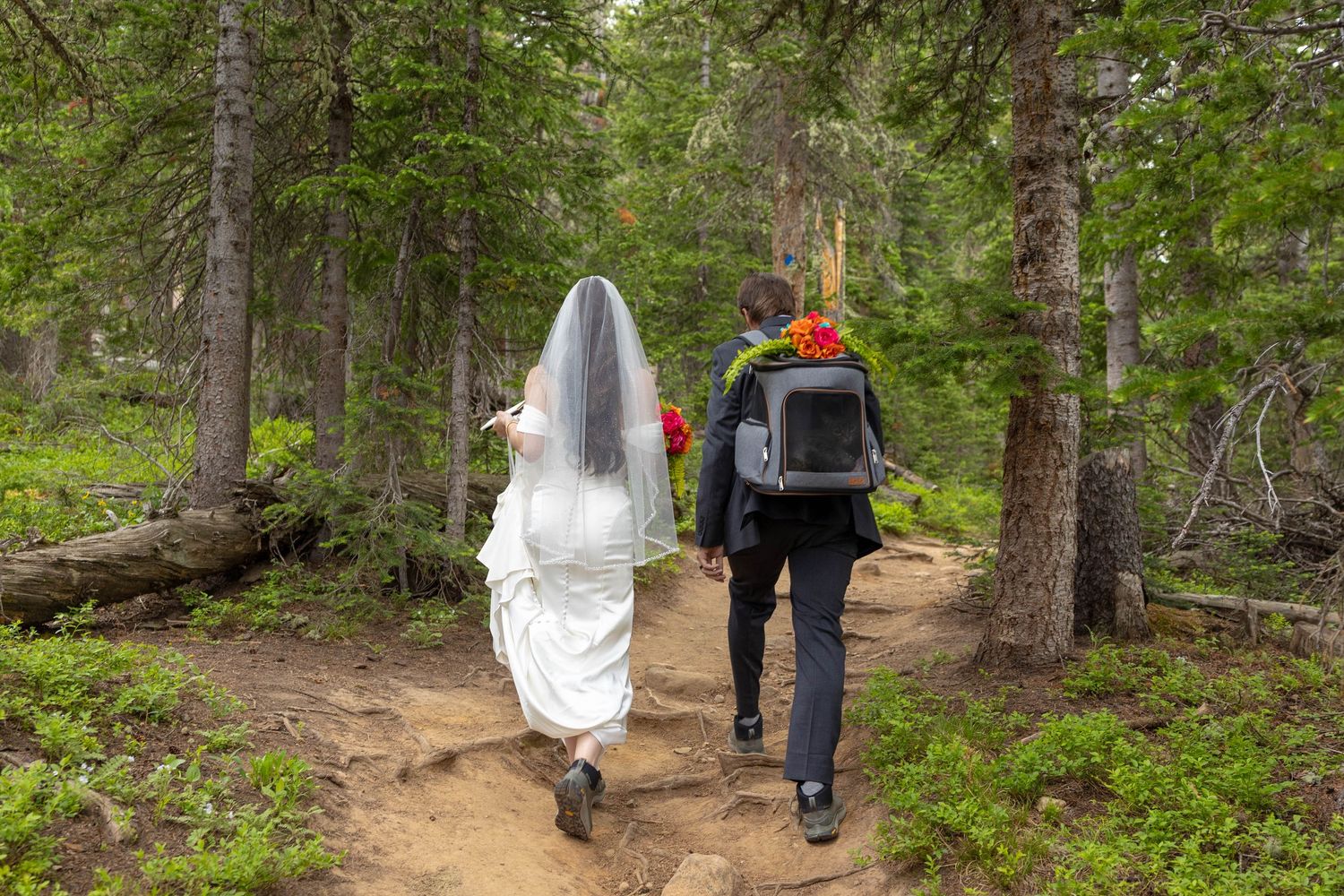
September 13th, 2026
How To Elope With Your Cat
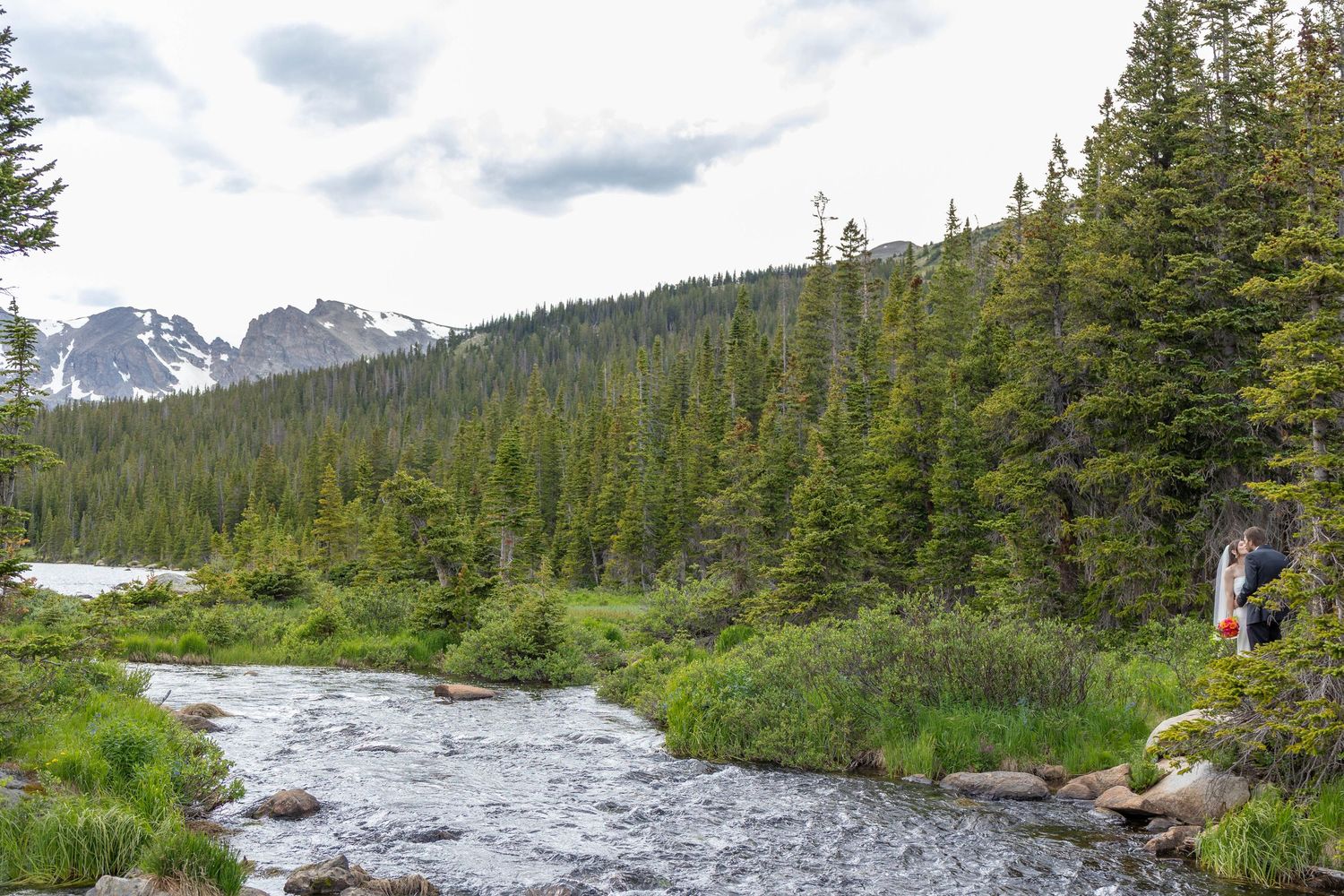
September 13th, 2026
Survival Tips for Visiting Colorado
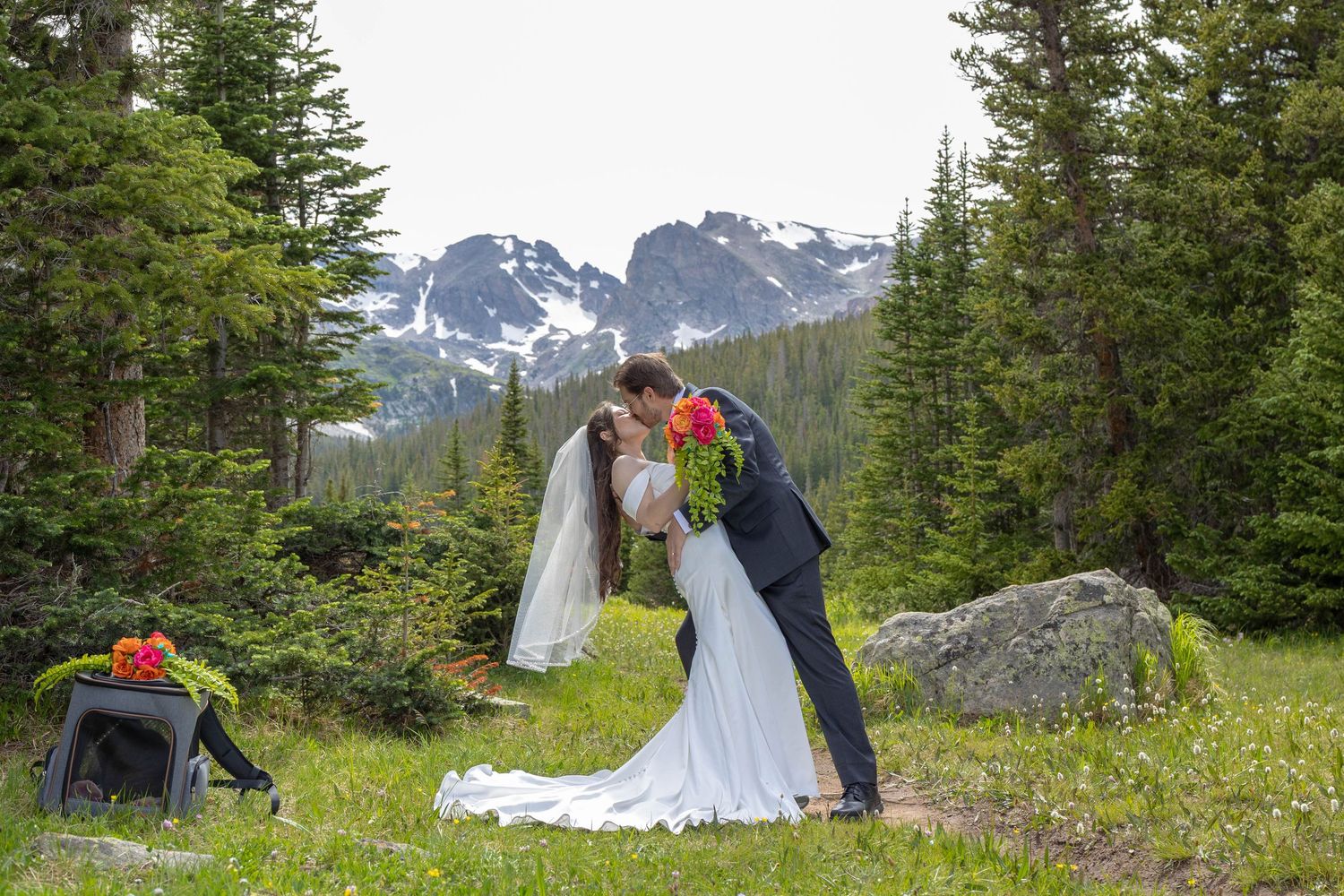
July 19th, 2026
How To Elope at Brainard Lake Recreation Area
June 13th, 2026
Eloping in Summit County
June 13th, 2026
Colorado's National Parks

June 12th, 2026